Why a Capsule Wardrobe That Looks Perfectly Balanced on a Planning Spreadsheet Can Still Feel Limiting to Actually Wear
A capsule wardrobe built to a spreadsheet formula, ten pieces multiplying out to dozens of theoretical outfit combinations, can still feel surprisingly limiting to actually get dressed from every morning, and the shortfall isn’t in the math — it’s that a spreadsheet counts every mathematically possible pairing, including plenty nobody would ever actually choose to wear.

Why a Spreadsheet Counts Combinations Without Judging Them
The blind spot: a-capsule-planning-spreadsheet-counts-every-mathematically-possible-pairing-of-pieces-as-one-valid-outfit-without-any-way-to-judge-whether-a-person-would-ever-actually-choose-to-wear-it (a capsule planning spreadsheet counting every single mathematically possible pairing of pieces as one fully valid outfit, without any built-in way to judge whether a person would ever actually choose to wear that specific combination in real life, per the capsule-color-palette-formula logic — a-capsule-planning-spreadsheet-counting-every-single-mathematically-possible-pairing-of-pieces-as-one-fully-valid-outfit-without-any-way-to-judge-whether-a-person-would-actually-choose-to-wear-it), and the reframe (a high combination count describing mathematical possibility, not real usable variety)).

Why a Real Share of Those Combinations Are Never Chosen
The gap: a-meaningful-share-of-a-capsules-theoretical-combinations-mismatch-in-formality-color-or-occasion-in-ways-that-make-them-technically-countable-but-never-actually-worn-in-practice (a meaningful share of a capsule wardrobe’s theoretical combinations mismatching in formality, color, or intended occasion in ways that leave them technically countable on paper but never actually worn in real, everyday practice, per the build-a-capsule-wardrobe logic — a-meaningful-share-of-a-capsule-wardrobes-theoretical-combinations-mismatching-in-formality-color-or-intended-occasion-in-ways-that-leave-them-technically-countable-but-never-actually-worn-in-practice), and the frame (the real usable wardrobe being noticeably smaller than the spreadsheet’s headline number)).
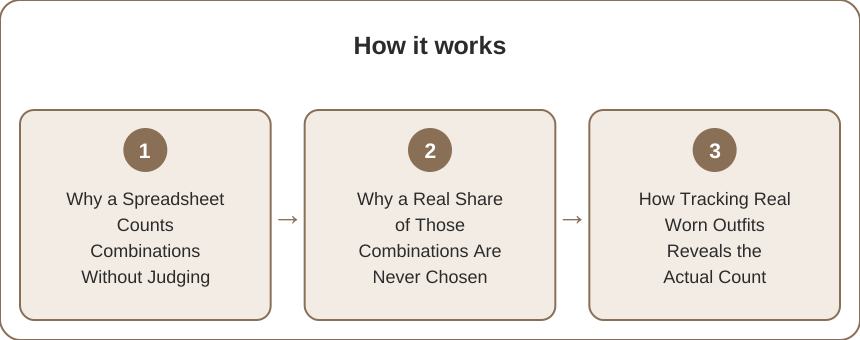
How Tracking Real Worn Outfits Reveals the Actual Count
The check: log-every-actual-outfit-worn-from-a-capsule-over-a-full-month-and-compare-that-real-count-against-the-spreadsheets-theoretical-combination-total-to-see-the-true-usable-range (logging every single actual outfit worn from a capsule over a full calendar month, then comparing that real, lived count directly against the spreadsheet’s theoretical combination total, in order to see the true usable range that capsule is actually offering, per the capsule-for-your-lifestyle-guide logic — logging-every-single-actual-outfit-worn-from-a-capsule-over-a-full-calendar-month-then-comparing-that-real-lived-count-directly-against-the-spreadsheets-theoretical-combination-total-to-see-the-true-usable-range), and the frame (a real worn count replacing a theoretical one as the honest measure of a capsule’s actual usefulness).
A capsule planning spreadsheet counts every mathematically possible pairing as one valid outfit, without any way to judge whether a person would actually choose to wear it, and a meaningful share of those combinations mismatch in formality or occasion in ways that leave them technically countable but never actually worn. Logging every real outfit worn from a capsule over a full month and comparing that count against the spreadsheet’s theoretical total replaces a mathematical estimate with the honest, lived measure of how usable that capsule really is.
Keep Reading
This article is for general styling and informational purposes only. Trends, sizing, availability and pricing may vary by brand and season.