The Capsule Edit

Fewer pieces, endless outfits

7 Capsule Wardrobe Mistakes (And How to Fix Them)

2026-07-13

Quick Answer: Most capsule wardrobes fail for one of seven reasons — building for an imagined life instead of your real one, a scattered color palette, going too minimal or too large, ignoring fit and quality, buying everything at once, forgetting shoes and outerwear, or treating the capsule as permanent. The two that break capsules fastest are the palette and the real-life audit. Fix those first.

A capsule wardrobe promises effortless, mix-and-match dressing. Everything goes with everything, mornings get shorter, and you stop staring at a full closet with nothing to wear.

Plenty of people build one anyway and end up with a smaller closet that still doesn’t work.

The difference between a capsule that transforms your mornings and one that gathers dust comes down to a handful of specific, predictable mistakes. Here’s each one, and exactly how to fix it — the fifth is the one that costs the most money.

7 Capsule Wardrobe Mistakes (And How to Fix Them)

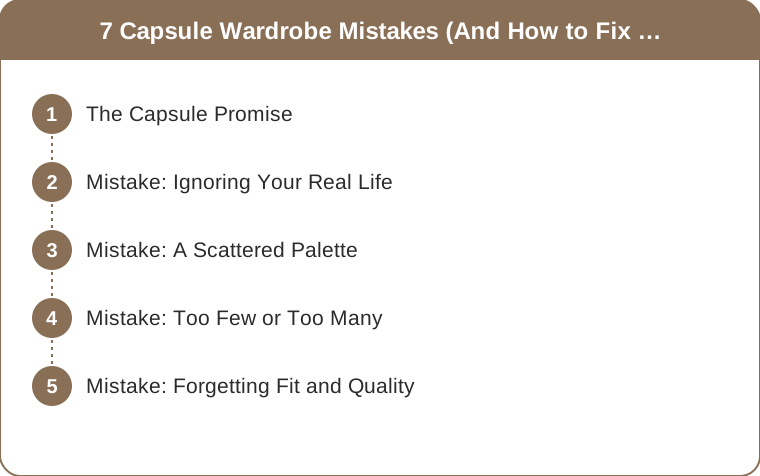
At a glance

What Makes a Capsule Wardrobe Actually Work?

A capsule works when three conditions hold simultaneously.

Everything combines. Any top goes with any bottom. That’s not a nice bonus — it’s the mechanism. A 20-piece capsule where everything mixes gives you far more outfits than a 60-piece closet where things don’t.

It matches your actual week. If you spend four days at a desk and three days chasing a toddler, the capsule needs to reflect that split, not the version of your life you’d like to be living.

Every piece fits well. In a small wardrobe, one badly fitting piece is 5% of your options gone. In a large one it’s a rounding error.

Miss any of the three and the capsule quietly stops being used, usually within about six weeks.

Mistake 1: Ignoring Your Real Life

Building a capsule around an imagined lifestyle is the most common failure, and it’s seductive because the imagined version is more fun to shop for.

The fix — do the 30-day audit. Look at your actual calendar for the past month and count. How many days were office days? Casual days? Workout days? Evening-out days? Then allocate your capsule slots in the same proportions.

If four of your 30 days involved anything remotely dressy, you need one dressy outfit, not five. Practicality comes first, and it’s usually less glamorous than the Pinterest board.

Mistake 2: A Scattered Palette

Choosing pieces that don’t share a cohesive color story kills the mix-and-match magic entirely — which means it kills the whole point.

The fix — the 3+2 rule. Choose three neutrals that will be the bulk of your capsule (say navy, cream, and grey), plus two accent colors that work with all three. Everything you buy must fit into those five.

The constraint feels severe for about a week and then becomes the reason getting dressed takes 90 seconds. A tight palette is the single highest-leverage decision in the whole process.

7 Capsule Wardrobe Mistakes (And How to Fix Them)

Mistake 3: Too Few or Too Many Pieces

Going so minimal you’re bored, or so large it isn’t really a capsule, both defeat the purpose in opposite directions.

The fix — start at 30–35 pieces per season, excluding underwear, sleepwear, and workout clothes. That’s roughly 8–10 tops, 5–6 bottoms, 2–3 layers, 1–2 dresses, 3–4 pairs of shoes, and 2 outer layers.

Then adjust from your own data. If you’re doing laundry constantly, you’re too low. If pieces go unworn for a full season, you’re too high. There’s no universally correct number, but 30–35 is a good place to discover yours.

Mistake 4: Forgetting Fit and Quality

A capsule built on ill-fitting or flimsy pieces falls apart fast — literally, in the case of the flimsy ones.

The fix — budget for alterations from the start. Set aside roughly 15% of your capsule budget for tailoring. Hemming trousers, taking in a waist, shortening sleeves. These cost $15–40 each and transform how a piece looks.

And check fabric before you check price. Look for natural fibers or substantial blends, check that knits aren’t already pilling on the rack, and hold lighter fabrics up to the light. In a wardrobe of 30 pieces, each one gets worn 3–4 times more often than in a wardrobe of 100. They need to survive it.

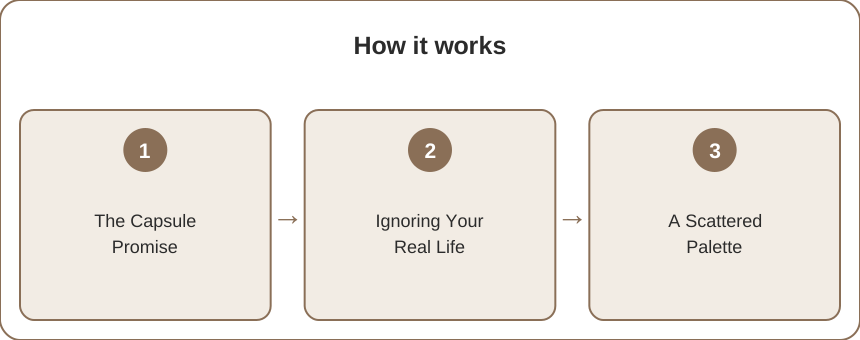
How it works

Mistake 5: Buying It All at Once

This is the expensive one. Someone decides to build a capsule, spends a weekend and a significant sum, and discovers a month later that a third of it doesn’t work.

The fix — shop your closet first, then fill gaps over 8–12 weeks. Pull everything that already fits your palette and your real-life audit. Wear only those pieces for two weeks. The gaps will announce themselves clearly, and they’re usually different from the ones you predicted.

Then buy one piece at a time, wear it three times, and confirm it’s working before buying the next.

Mistake 6: Forgetting Shoes and Outerwear

People build a beautiful capsule of tops and bottoms and then pair it with whatever shoes they happen to own, in colors that fight the palette.

The fix — treat shoes and coats as capsule pieces with the same rules. Three or four pairs of shoes covering your real-life categories, in colors from your palette. Two outer layers, same. A coat is the piece other people see most in cold months; it deserves more consideration than it usually gets.

Mistake 7: Treating the Capsule as Permanent

A capsule is a working system, not a monument. Bodies change, jobs change, seasons change, and a capsule frozen in place slowly stops matching your life.

The fix — review at the end of each season. Anything unworn goes on probation for one more season, then leaves. Anything worn out gets replaced deliberately. Anything that no longer suits your routine gets swapped.

Twenty minutes, four times a year. That’s the maintenance cost of a wardrobe that keeps working.

Mini FAQ

How many pieces should be in a capsule wardrobe?

For most people, 30–35 pieces per season excluding underwear, sleepwear, and workout gear. The exact number matters far less than whether every piece combines with the others — a cohesive 25 works better than a scattered 45.

Do capsule wardrobes actually save money?

Over time, yes, provided you avoid the buy-it-all-at-once mistake. The savings come from fewer impulse purchases and from the fact that a tight palette makes each new piece verifiably useful before you buy it. The first season often costs more than usual, though.

What should you buy first when building a capsule wardrobe?

Nothing. Shop your existing closet first, wear only the qualifying pieces for two weeks, and let the gaps reveal themselves. When you do start buying, begin with bottoms — they anchor the palette and get worn most often.

TL;DR:

  • Audit your actual last 30 days before you build anything.
  • Lock a palette: three neutrals plus two accents. Nothing enters that doesn’t fit.
  • Start around 30–35 pieces per season, then adjust from your own wear data.
  • Budget ~15% for alterations — fit matters more in a small wardrobe than anywhere else.
  • Fill gaps over 8–12 weeks, not one weekend. Include shoes and coats. Review each season.

A capsule only works if you sidestep the traps. Build for your real life, commit to the palette, find your number, and never skimp on fit — then it delivers the effortless dressing it promised.

Keep Reading

This article is for general styling and informational purposes only. Trends, sizing, availability and pricing may vary by brand and season.

capsule wardrobemistakeswardrobe

← All articles