The Capsule Edit

Fewer pieces, endless outfits

The Summer Capsule: 15 Pieces, Endless Warm-Weather Outfits

2026-07-14

Quick Answer: Fifteen pieces cover a full summer: 4 tops, 3 bottoms, 3 dresses, 2 layers, swimwear, and 2 pairs of shoes. The rule that makes it work is palette discipline — two neutrals plus two accent colors, so every piece cross-pollinates with every other. Choose linen, cotton, and matte jersey over anything delicate, and rotate accessories rather than garments to keep it interesting.

Summer is the capsule wardrobe’s easiest win. Fewer layers to coordinate, lighter fabrics that wash fast, and a season where rewearing things is completely normal.

Fifteen pieces, chosen with any discipline at all, generate more outfits than most people wear in three months.

The Summer Capsule: 15 Pieces, Endless Warm-Weather Outfits

At a glance

What Are the 15 Pieces?

4 tops

  • 2 tanks (one fitted, one relaxed)
  • 1 t-shirt in a good cotton
  • 1 “nice” blouse for dinners and meetings

3 bottoms

  • 1 linen trouser
  • 1 pair of shorts
  • 1 skirt (midi is the most versatile)

3 dresses

  • 1 casual (throw over swimwear, wear to the shops)
  • 1 elevated (dinner, an event, a smart lunch)
  • 1 easy midi that sits between the two

2 layers

  • 1 oversized shirt (beach cover-up, sun protection, air-conditioning insurance)
  • 1 fine knit or cardigan for evenings

1 swimsuit

2 shoes

  • 1 flat leather sandal
  • 1 clean sneaker

That’s the entire engine. Run the combinations and there are comfortably sixty-plus distinct outfits inside it, before you touch accessories.

Why Does the Color Palette Matter So Much?

Because it’s the mechanism that makes fifteen pieces behave like forty.

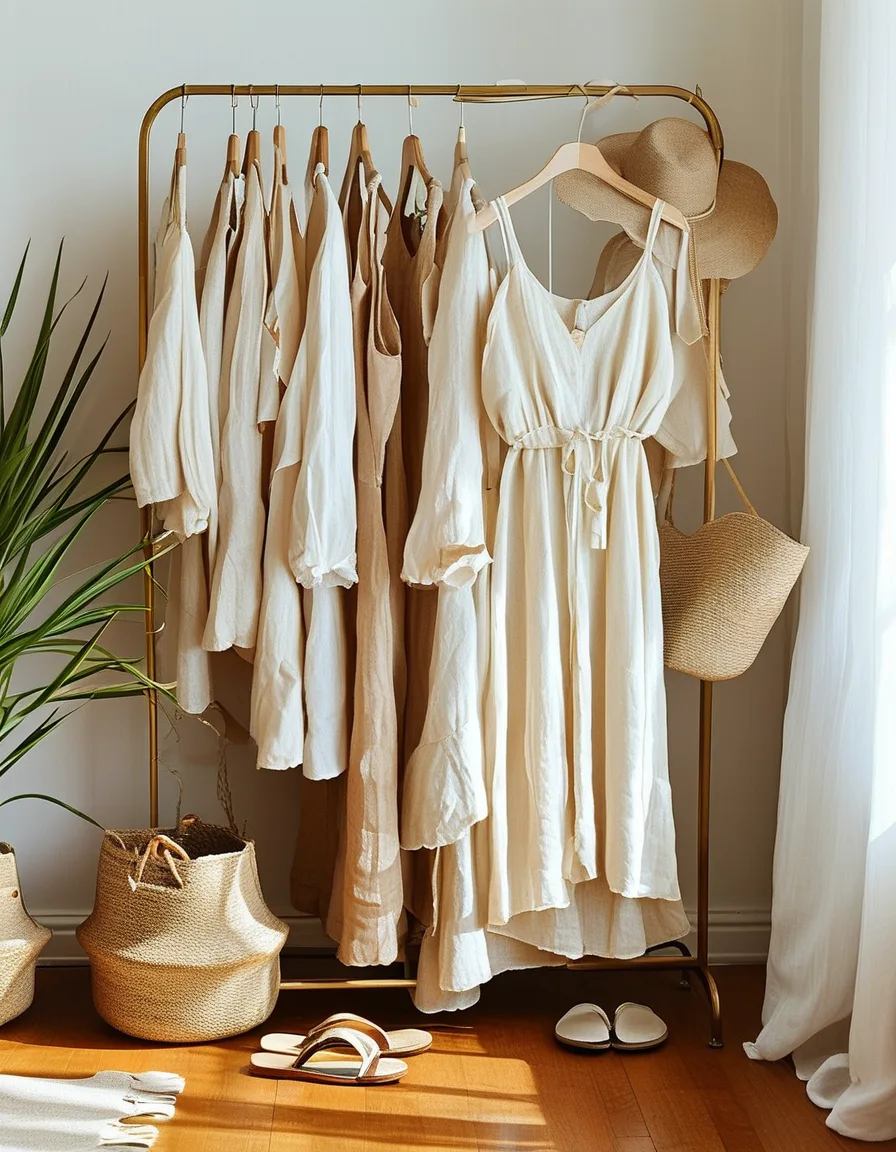
Two neutrals plus two accents. For example: cream and navy as the neutrals, butter yellow and terracotta as the accents. Every top works with every bottom. Every layer works over every dress. You don’t have to check.

This is the difference between a capsule and a small wardrobe. A small wardrobe of fifteen random pieces gives you maybe twelve workable outfits, because half the combinations clash. Fifteen pieces in a coordinated palette gives you almost all of them.

Summer capsules die from random rainbow buying — the holiday impulse purchase in a color that matches nothing you own, worn twice and then permanently orphaned.

Choosing your palette: pick neutrals you already own a lot of (there’s no point choosing black if your wardrobe is beige), then pick accents that suit your coloring. Warm complexions do well with terracotta, butter, and olive; cooler ones with navy, powder blue, and raspberry.

The Summer Capsule: 15 Pieces, Endless Warm-Weather Outfits

Which Fabrics Should You Choose?

Fabric is the strategy, because capsule pieces get worn far more often than wardrobe pieces do.

Choose:

  • Linen and linen blends — breathable, gets better with washing, handles heat like nothing else
  • Cotton — poplin for structure, jersey for ease
  • Matte jersey — travels well, doesn’t wrinkle, drapes without clinging
  • Crinkle textures — designed to look creased, so they never look wrong

Avoid:

  • Anything dry-clean-only. In a fifteen-piece wardrobe, every item is in rotation constantly
  • Polyester in anything worn against skin in heat
  • Very fine silk that marks with perspiration
  • Pale linen that needs pressing after every wear (a blend fixes this)

The test: would you be happy washing this every four days for three months? If not, it’s not capsule material. Delicate divas stay out — they can have their own drawer for special occasions.

5 Mistakes Everyone Makes

1. Buying all fifteen pieces at once. You’ll compromise on six of them and then be stuck with the compromises all season. Build from what you already own and fill gaps deliberately.

2. Counting pieces you never wear. A capsule is fifteen pieces you wear, not fifteen items in a drawer. If something goes unworn for three weeks, it’s not in the capsule — it’s just nearby.

3. Choosing a palette you don’t already own. Starting from scratch on color means replacing everything. Look in the wardrobe first and build the palette around what’s already there.

4. Skipping the “elevated” dress. People build practical capsules and then have nothing for the one dinner that comes up. One piece that handles an occasion prevents an emergency purchase that breaks the palette.

5. Treating it as permanent. A capsule is a working system, not a monument. Swapping pieces out is the process, not a failure of it.

How Do You Stop a Capsule Getting Boring?

Rotate the styling, not the garments. Accessories are what change the story.

  • Scarves — in hair, on a bag, as a belt. A silk square makes the same dress read differently three ways
  • Statement earrings — the fastest change of register available
  • One bold bag — a color outside the palette, used deliberately as the single loud element
  • Belts — a defined waist changes a dress’s entire silhouette
  • Hair — up, down, claw clip, headscarf. Genuinely counts

The same midi dress with sneakers and a canvas tote is a Saturday; with sandals, gold earrings, and a belt it’s a dinner. Nobody notices it’s the same dress, and it wouldn’t matter if they did.

Capsules aren’t restriction. They’re a styling gym — the constraint is what makes you get better at it.

How it works

How Do You Test and Tune It?

Two weeks in, note what never gets worn. There will be one or two pieces. That’s normal and it’s the most useful data the exercise produces.

Ask why before swapping. Is it the fit, the fabric, the color, or does it just not go with anything? The answer tells you what to replace it with, which is more valuable than the replacement itself.

Swap one piece at a time, so you can tell whether it improved things.

Keep a note for next year. By August you’ll know exactly which fifteen worked. Write it down, and next May the capsule is already designed.

Capsules are living systems. The perfect summer fifteen emerges through use, not through planning.

Frequently Asked Questions

Does the 15-piece count include shoes and swimwear?

In this version, yes — 4 tops, 3 bottoms, 3 dresses, 2 layers, 1 swimsuit, 2 shoes. Most people also keep underwear, sleepwear, gym kit, and outerwear outside the count, since those don’t participate in the mix-and-match logic. If you swim daily or exercise most days, treat those as a separate small capsule of their own rather than squeezing them into the fifteen.

Can a capsule wardrobe work if I have a strict office dress code?

Yes, with an adjusted mix — swap one casual dress and the shorts for a second tailored trouser and a smarter top, and make the “elevated” pieces do more of the work. The principles don’t change; the ratio does. Two neutrals plus two accents works just as well in a formal palette as a casual one.

What do I do with the clothes that don’t make the capsule?

Box them rather than donating immediately, and revisit at the end of the season. Some pieces you’ll genuinely miss, which tells you they belong in next year’s fifteen; most you won’t think about once, which makes the decision to pass them on considerably easier than making it in July.


TL;DR:

  • The 15: 4 tops, 3 bottoms, 3 dresses, 2 layers, swimwear, 2 shoes
  • Palette rule: two neutrals + two accents, so everything cross-pollinates automatically
  • Fabrics: linen, cotton, matte jersey, crinkle textures. Nothing dry-clean-only
  • Build from what you own; don’t buy all fifteen at once
  • Rotate accessories, not garments, to keep it interesting
  • Note what goes unworn after two weeks and swap one piece at a time
  • Write down the winning fifteen in August — next year’s capsule designs itself

Build it, test it, tune it — and spend the saved decision-energy on actual summer. More on the summer capsule build.

Keep Reading

This article is for general styling and informational purposes only. Trends, sizing, availability and pricing may vary by brand and season.

capsule wardrobesummerminimalism

← All articles